SEARCH RESULTS
Search this site
1186 results found with an empty search
- Zaiden Jackson - Portrait - 1
Back to Artwork Portrait Back to Sections Zaiden Jackson - Portrait - 1 By Zaiden Jackson January 20, 2021 Photography Volume 1 Issue 4
- A Compliment to Lichtenstein
Back to Artwork Prism Back to Sections A Compliment to Lichtenstein By Kimberly Shrestha November 24, 2020 Volume 1 Issue 2
- Hajara- Gilana Etame
Back to Artwork The Memory Project Back to Sections Hajara- Gilana Etame Gilana Etame February 24, 2023 Volume 3 Issue 3
- What is Line?
Back to Articles Art Back to Sections What is Line? By Luiginna Frederique Volume 1 Issue 1 November 1, 2020 Original artwork by Luiginna Frederique One of the primary elements of artistic creation is line. Defined most simply as points moving in a space, lines aren’t given enough credit for the impact they can have on a piece. The angle, width, and, even texture, of a line transforms a piece entirely based on its use. Not only are lines used to define shapes and figures, but a still image could resemble different motions and emotions based on the use of the line. Light and shadow could also be simulated through effective use of lines. Thick, textured lines can resemble a dark and more grimy part of an object, where as thin, delicate, and neat lines could be used to show how much light is shone on an object. Hatching is a popular technique that uses lines to portray color differences or even shadows in an image. Contour lines are also a great use of line. It’s a technique used to outline the most prominent features of an object or subject. In addition to line techniques that emphasize texture and light, the shape of the line can also add an aesthetic or essence to an image. Organic lines, more “realistic” lines that can be found in nature, can make an image seem smoother, or create a flow within the image. Inorganic lines, straight edges, neat and “perfect” lines, connect to a modern and man-made look. BACK TO TOP
- National Junior Honor Society
Back to Articles News Back to Sections National Junior Honor Society By Ismaela Andre Volume 1 Issue 2 November 24, 2020 Original photos from NJHS Induction Ceremony Congratulations! There are new members in the National Junior Honor Society. On Monday November 9, 2020, 56 students were virtually inducted into the invitation only club. They were inducted due to their excellence, respect, leadership, kindness, integrity and creativity. All inductees must have met the requirement of a 90 overall average, as well as participating in clubs, sports, and volunteering outside of school. They worked exceedingly hard for a spot in this program. Vice President Craig Papajohn-Shaw and Public Relations Officer Keila Lawrence made a joint statement about the event stating, “ The NJHS Executive Committee was thrilled to be able to give the May 2020 inductees the ceremony they deserve. Although it wasn't in person, we worked very hard to bring the inductees the best possible experience while keeping them safe and following COVID-19 guidelines. We were happy to bring smiles to the faces of both the inductees and their families and we look forward to working with the new members in our virtual service projects. ” Both were very proud to see the inductees have this moment to celebrate their accomplishments. During my interview with the club advisors, Ms. Suarez and Mrs. Italiano, they quoted one of Muhammad Ali’s famous statements: “Service to others is the rent you pay for your room here on Earth.” They also quoted Mahatma Ghandi: "Be the change you wish to see in the world." Ms. Suarez is thankful for the dedication of the inductees. She wants to encourage the inductees to do more community service and keep up with their hours because they have increased. Also, Mrs. Italiano congratulates and advises all inductees to keep serving their communities. It gives me great pleasure to be part of this honor society, and I look forward to working with Mrs. Suarez, Mrs. Italiano, the advisors, and all members of the National Junior Honor Society. BACK TO TOP
- Spring Break Activities to do in Long Island
Back to Articles Feature Back to Sections Spring Break Activities to do in Long Island Mya Hans Volume 4 Issue 4 May 29, 2024 Image Provided by Elaine Ching The highly anticipated spring break is on its way, and the sun is coming out! There are so many exciting things to do in the beautiful weather. If you want to have a fun and memorable spring break but don’t know exactly what you want to do, I have a bunch of activities that you should consider. The first activity most people do when it’s nice out is go to the beach. There’s nothing better than being in the warm sand and then going into the ocean to cool off on a hot day. Also, some beaches, such as Long Beach, have a boardwalk with nice little cafes, restaurants, and ice cream parlors to grab something to eat. You can ride your bike, or walk, and some people even bring their dog on the boardwalk. Some people may not like the beach, but a great alternative is the pool. The pool in Hendrickson Park is nice because it has an eating area, a side of the pool for kids, and diving boards, as well as an entire park outside of the pool area. Another activity you can do is go to an amusement park. A popular one in Long Island is Adventureland. There is also Valley Stream’s annual carnival, as well as trampoline parks like Sky Zone in the area. Amusement parks are fun to go to during the day or night, especially with friends. Adventureland appeals to many people because it has various activities to offer like delicious food and snacks, an arcade, and games. Adventureland also doesn’t have many extreme rollercoaster rides, besides the Galleon Pirate Ship Ride, the Turbulence coaster, and the Frisbee ride, so regardless of whether you’re a roller coaster fan or not, you can go on basically any of the rides there. While more expensive, going to a concert is another memorable activity. During the spring, because of the nice weather, there will probably be a lot of outdoor concert venues. Who wouldn’t want to see their favorite artist in the sunny weather? Some artists have cheaper concert tickets, and some are more expensive, but reliable apps like TickPick, Ticketmaster, and Vivid Seats, may give you a good deal on some concert tickets. Overall, going to a concert of an artist or band you love is an unforgettable experience and worth the money, so why not do it over spring break? The last activity I think is enjoyable year-round is going to the movies. You can go to an actual movie theater—or you can go to a drive-in movie. You can even check if somewhere in your community is having an outdoor movie night; they do host some at Hendrickson Park and Nickerson Beach Park by the ocean. Watching a good movie and being among your family and friends is a wonderful way to have fun and make some memories. Do you like any of the activities I listed? Would you want to do any of them? Whether you do or don’t I hope you have a wonderful spring break filled with lots of amazing memories and come back ready to take on the end of the school year! BACK TO TOP
- Wardah Khizer
Wardah Khizer NEWS EDITOR Hello! My name is Wardah Khizer, and I am the News Editor for North Star. I mainly write articles about current school news and events, but occasionally I write about global issues and politics. I enjoy writing about my interests, so you will periodically see me in other sections. Along with writing articles, I am an active member in various clubs, such as the MSA and the Culture Society. I look forward to reading your submissions, and if you have any questions, feel free to reach out to me through email! Exam Study Tips Wardah Khizer Advice Read More North's Annual Club Fair Wardah Khizer News Read More MSA Day of Unity Conference Wardah Khizer News Read More Groundhog Day Wardah Khizer News Read More MSA's Annual Eid Festival Wardah Khizer News Read More
- The Israel-Gaza Conflict: A Complex and Ongoing Struggle
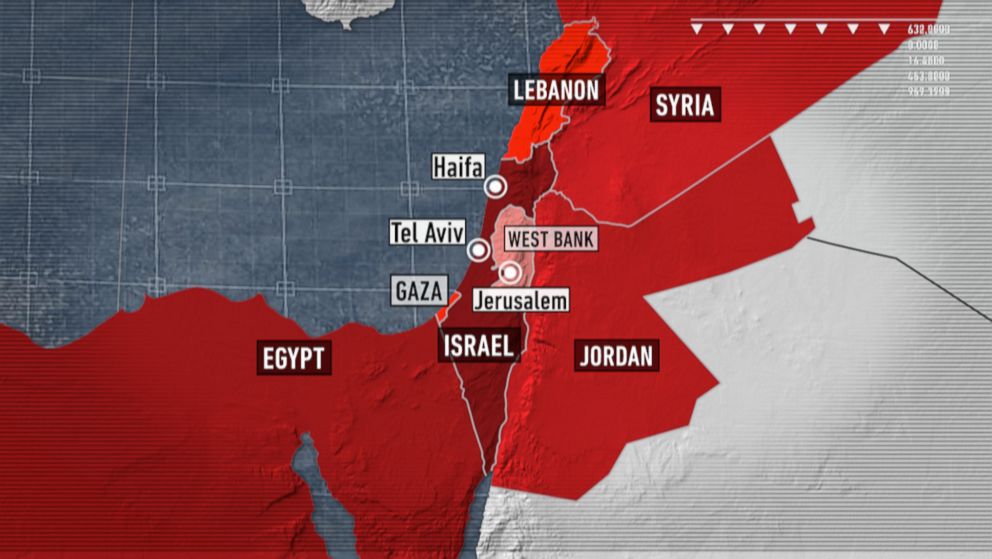
Back to Articles News Back to Sections The Israel-Gaza Conflict: A Complex and Ongoing Struggle Leah Ally Volume 4 Issue 1 November 6, 2023 Image provided by ABC News The Israel-Gaza conflict is a long-standing and complex issue that has been the source of much tension and violence in the Middle East, and here in America. Rooted in historical, political, and religious factors, this conflict has resulted in the loss of countless lives and has had far-reaching consequences for both Israelis and Palestinians. The conflict can be traced back to the establishment of the State of Israel in 1948. Following the end of British colonial rule, Israel declared independence, leading to a war with neighboring Arab states. The war resulted in the displacement of hundreds of thousands of Palestinians, who became refugees in neighboring countries, including Gaza. Gaza, a small strip of land located on the eastern coast of the Mediterranean Sea, has been a central point of the conflict. Since 1967, Israel has maintained control over Gaza, although it withdrew its military presence and settlements in 2005. The territory is now governed by Hamas, an Islamist political and military organization that is considered a terrorist group by Israel and several other countries. The conflict between Israel and Gaza is characterized by a cycle of violence and retaliation. Rockets fired from Gaza into Israeli territory have led to Israeli military responses, resulting in casualties on both sides. The Israeli government argues that it has the right to defend its citizens from attacks, while Palestinians in Gaza claim that they are resisting occupation and seeking self-determination. One of the main issues at the heart of the conflict is the question of land and borders. Palestinians in Gaza, as well as the West Bank, seek the establishment of an independent Palestinian state with East Jerusalem as its capital. However, Israel maintains control over significant portions of the West Bank and continues to build settlements, which are considered illegal under international law. As a result, the expansion of settlements has further fueled tensions between the two sides. Another key factor in the conflict is the issue of security. Israel argues that it must take measures to protect its citizens from terrorist attacks, citing the frequent rocket fire from Gaza as a threat to its national security. In response, Israel has imposed a blockade on Gaza, restricting the movement of goods and people in and out of the territory. Critics argue that the blockade has led to a humanitarian crisis, with limited access to basic necessities such as food, water, and healthcare. The conflict also has deep religious and cultural dimensions. Jerusalem, a city considered holy by Jews, Muslims, and Christians, has been a flashpoint for tensions. The status of Jerusalem, particularly the control over the holy sites, has been a contentious issue in peace negotiations. The competing claims and religious significance of the city have further complicated efforts to find a resolution to the conflict. According to history.state.gov , " On November 29, 1947 the United Nations adopted Resolution 181 (also known as the Partition Resolution) that would divide Great Britain’s former Palestinian mandate into Jewish and Arab states in May 1948 when the British mandate was scheduled to end," bringing the city of Jerusalem "under international governance" and giving it special legal and political status as a "corpus separatum," meaning separate body. Efforts to achieve a lasting peace between Israel and Gaza have been ongoing for decades. Numerous peace agreements, such as the Oslo Accords in the 1990s, have been signed, but have ultimately failed to bring about a lasting solution. The lack of trust, deep-rooted grievances, and political divisions on both sides have delayed progress towards a peaceful resolution. International factors including the United Nations, the United States, and regional powers, have been involved in mediating the conflict. However, finding a solution that satisfies the aspirations and security concerns of both Israelis and Palestinians remains a daunting task. The Israel-Gaza conflict is a complex and deeply entrenched struggle that has resulted in immense suffering for both Israelis and Palestinians. The issues of land, security, and religious significance have contributed to the ongoing cycle of violence and retaliation. Achieving a lasting peace will require political will, compromise, and a commitment to dialogue and understanding from all parties involved. Most feel only through a comprehensive and inclusive approach can a just and sustainable resolution to this conflict be achieved. Sources: Israel Gaza war: History of the conflict explained - BBC News Israel-Palestine history: The deep roots of the Israel-Gaza conflict - Vox BACK TO TOP
- Geocaching
Back to Articles Entertainment & Media Back to Sections Geocaching By Carolina Figueroa Volume 2 Issue 5 March 28, 2022 Image provided by Winchester-Frederick Country Convention & Visitors Bureau Do you love to be outdoors, solve riddles, and search for interesting things? If so, you may want to try searching for geocaches! Geocaching is a popular “fun outdoor recreational activity and hobby that feels like real-world treasure-hunting”! People participate in geocaching from all over the world by using navigational techniques to “hide and seek” compact containers at specific locations marked by coordinates worldwide. They hide small containers, called geocaches or caches, with small prizes inside, and then other people try to find them using maps and clues on their Global Positioning System (GPS) receivers or GPS-enabled mobile devices. Currently, there are more than 3 million geocaches hidden around the world for people to find. A typical geocache is created when a player hides a small-scale waterproof container somewhere in the world and then logs its exact location on the Geocaching app. Inside the container, the hider will put a logbook (or a notebook that players can sign) with a pen or pencil and sometimes small prizes, pins, trinkets, or little toys for trading. These mini toys and trinkets are usually of more sentimental worth than financial. Some geocachers may choose to use large plastic storage containers (similar to Tupperware). Next, other players try to find what has been hidden using the navigation system on the Geocaching app. Sometimes finding a geocache will be easy and straightforward, but other times they are very well hidden in their spots and you really have to look and search hard for them! To get started, you first have to download the Geocaching app on a smartphone. When you click on the app, it shows you a map of nearby or local geocaches. You can also search for geocaches in different locations. For instance, if you plan on being away, you can search to see if and where there are geocaches in that location as well. Once you click on a geocache, you are able to see a description of it and other information about it, such as how much time it may take for you to find it. Next, click “navigate” to open up the directions to guide and navigate you to the spot. You will have to ask an adult to drive you to a park that you walk around together. Some geocaches may be hidden in other public spots, like a walking path in town. Other geocaches are hidden in parks, urban areas, forest, deserts, underwater, on top of mountains – pretty much anywhere you can imagine! The rule for a hiding place is “the geocache should not be easily visible to a passerby who is not looking for the cache. It should be a camouflaged hiding spot and the cache should blend perfectly into their environment”. People use their creativity to find hard and challenging hiding places, like in a tree hollow or stump, underneath bushes, wedged securely in-between rocks, using a fake rock or small fake squirrel container, or even road signs (a magnetic geocache, nestled between the sign itself and the pole). Another rule is “ do not ever bury geocaches (do not create a hole in the ground to find or place a geocache)”. Once you navigate to the location, you will have to look at the recent activity and description in the app for any hints or signs for clues that might help you find the cache. Have fun on your search! Geocaches come in all shapes and sizes and most often they are a small tube or a medium-sized box that looks like a heavy-duty plastic container. The container could also be innovatively stored inside an object. People from around the world cleverly and creatively store and hide geocaches in fun containers. For example, hidden in the woods in Germany, one geocache is housed in a tricky wooden birdhouse covered in puzzles for finders to solve. In Spain, a plastic super-sized strawberry geocache container looks like a big piece of fruit. In Massachusetts, a geocache has its logbook hidden within a classic calling telephone. In California, a tiny tube is screwed into the back of a plastic pigeon to hold a geocache’s logbook. And in Holland, a container features a hen with plastic eggs, one of which contains the logbook! There should always be a logbook so you can write down that you found the geocache with the date. The geocacher signs the log with their established code name and dates it, in order to prove that they found the cache. Many times, “you will find small prizes called tradeables, like small toys, pins, keychains, or crafts. You can take one of them as long as you replace it with an item of similar value”. When you are done signing the log, you must place the geocache back exactly where you found it so that other people can find it! Geocaching is a fun and exciting way to spend time outdoors, explore the beauty of nature, exercise your mind and body, solve puzzles and riddles, appreciate quality time with family and friends, and enjoy treasure-hunting! It is a hobby and interest that delights and appeals to all ages. It provides fun and happiness for the whole family. You may experience new places and meet new people, and you will stay active and healthy while creating lasting new memories. You will realize that discovery, exploration, beauty, and adventure still exist in the real world. Good luck searching for cool and interesting geocaches, wherever you may be in the world! BACK TO TOP
- Attacks on Women
Back to Articles News Back to Sections Attacks on Women Sahar Ali Volume 4 Issue 4 May 29, 2024 Image Provided by Elaine Ching Imagine walking down a street in New York City. You are minding your own business when out of the blue, someone attacks you, more specifically, punches you. This was the reality for some women in New York City. Recently, there have been multiple reports of young women claiming to have been punched by a man while walking in New York City in broad daylight. This issue has gained attention through social media platforms such as TikTok, in which the women involved revealed the details of their attacks. The news of the attacks started to surface on March 17th, 2024. Women in their 20s and 30s took to social media to share their experiences. Some of the women stated that they had been on their phones as they were walking when the attack took place. One woman claimed that she was attacked while walking home. Another claimed she was attacked while on her way to work and another asserted that she was attacked while walking her dog. Two of the women who were punched described their attacker to be very similar; it is possible that the aggressor was the same in both cases. Since March 17th, a dozen women have shared that they were attacked and two of the women went as far as to file police reports. One of the women involved in the attacks, Halley Kate Mcgookin, posted to TikTok on March 25th, stating, “You guys, I was literally just walking, and a man came up and punched me in the face.” Mcgookin went on to file a police report the same day. The video Mcgookin posted on TikTok had 49 million views and consisted of comments that tagged other women who experienced similar attacks. This included Olivia Brand. On March 17th, Brand posted a video stating she was also punched in the face. She goes on to say that the man said “sorry” and further went on to punch her in the head while on the sidewalk. A third victim, Mikayla Toninato, also commented on Mcgookin’s TikTok post; she too had been walking when a man approached her and hit her in the face while she was looking down at her phone. Following Toninato’s attack, Sarah Harvard was also attacked on March 19th while in the Lower East Side. Harvard did not post information regarding her attack on social media unlike the other victims; however, once she witnessed a buildup of posts about the same attacks, she explained her similar situation on Instagram and Twitter, following with a police report filed on March 27th. Selena Pikanab and Karina Dunford, two additional victims, also released posts on social media describing comparable incidents. So far, the New York Police Department has arrested a suspect: 40-year-old Skiboky Stora from Brooklyn. Stora has been charged with misdemeanor assault in Mcgookin’s attack. During his arraignment, Stora pleaded not guilty but was still in custody. Skiboky Stora has an interesting past as well. In the last three years, Stora launched long-shot bids for government positions such as governor, mayor, and city council member. On social media, it has been documented that Stora’s posts consists of pictures of him posing shirtless while appearing in front of a Donald Trump flag. On the darker side, many of Stora’s posts include videos of him harassing women as they are going about their day on the subway or street. In many areas of New York City, there has been an increase in misdemeanor assaults. Especially now, women are the main target. It is important for women of all ages in New York City to be aware of their surroundings, especially since men have assaulted many women this past month. Women should not have to worry about having to deal with such circumstances, however, everyone in New York City should take precaution in order to prevent these circumstances. SOURCES: Multiple women online say they were punched while walking around New York City ( nbcnews.com ) What we know about viral TikToks saying women are being punched in NYC streets ( msn.com ) BACK TO TOP